
The Penny Bank building in Leeds refers to the historic former Yorkshire Penny Bank premises, a striking Victorian-era building on Infirmary Street
Design and Style
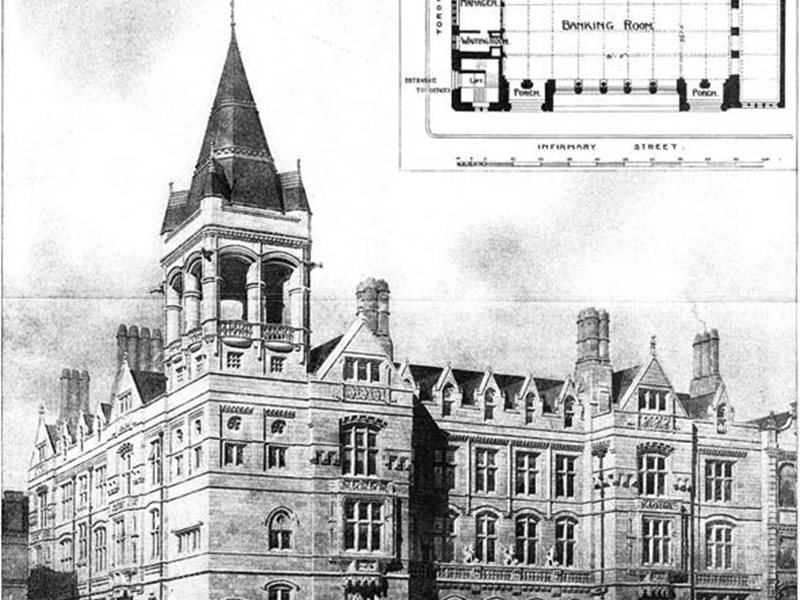
- Built in 1894 for the Yorkshire Penny Bank, this grand Victorian building was designed by architect George Bertram Bulmer in the Gothic Revival style, a popular and expressive architectural language in the late 19th century.
- It’s constructed from finely dressed ashlar stone with a slate roof, giving the façade a richly textured, sculptural quality.
Distinctive Exterior Features
- The building has a three-storey composition with attic and basement, featuring a central bay with tall, arcaded arches at ground level.
- Above the main entrance, decorative elements include winged lions, carved stone panels, and ornamental friezes, symbols designed to evoke strength, security, and prosperity.
- A towered staircase bay rises above the roofline, complete with gargoyles at the corners and a short, tiled spire, a dramatic flourish typical of the Gothic Revival aesthetic.
- The stone railings and wrought ironwork around the property add further intricate detail and craftsmanship.
Interior Legacy
- Although the interior has been adapted for modern use, original features survive in places, including oak-panelled rooms with elaborate plaster ceilings and fireplaces that reflect the building’s original banking hall grandeur.
Built on Historic Ground
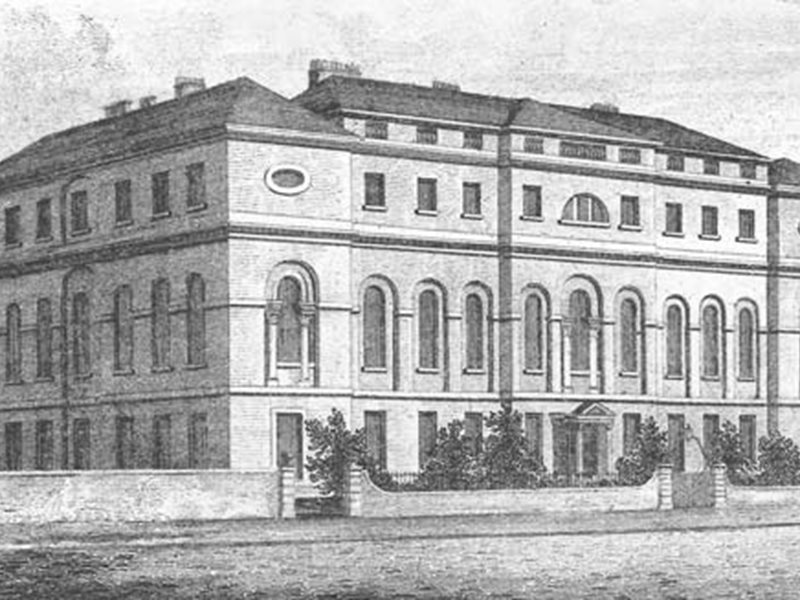
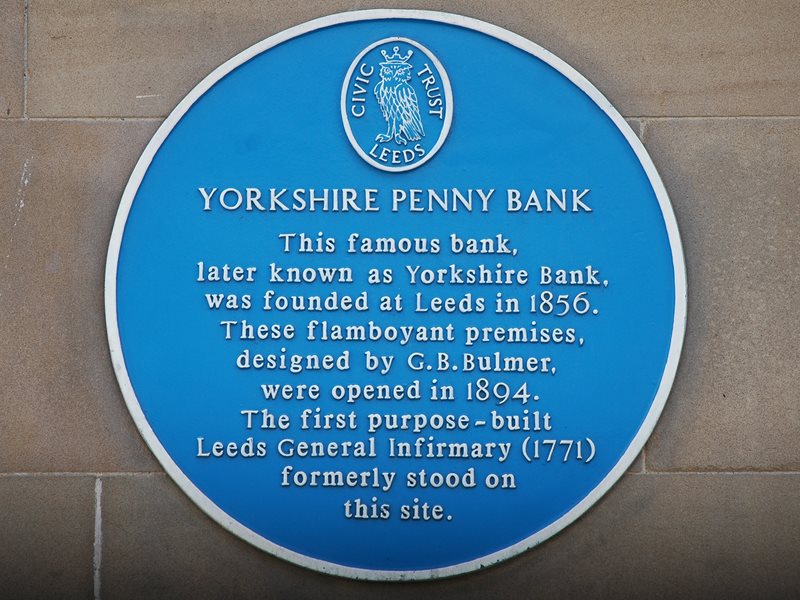
- The Penny Bank building occupies the site of the city’s first purpose-built Leeds General Infirmary, constructed in 1771 and demolished in 1893 to make way for the bank.
What Makes It Special
- It’s officially Grade II listed, meaning it’s recognised as a building of special architectural and historic interest and protected for future generations.
- Its richly detailed stonework and dramatic Gothic Revival features make it one of Leeds’ most striking Victorian commercial buildings.
- The dated inscriptions and decorative motifs (including carved dates and symbolic imagery) connect it back to the bank’s founding and mission to promote thrift and financial inclusion in the region.
From Banking to Events
While it no longer functions as a bank, the building’s historic character and architectural grandeur have been lovingly preserved and repurposed. Today it serves as a prestigious event space where modern facilities sit comfortably alongside the rich detailing of its Victorian past.